Museums play an important role in helping visitors engage with the past. The language used in displays, interpretation panels, and exhibition materials can influence how people understand archaeological collections, cultural heritage, and, in some cases, human remains. Understanding these impacts is increasingly important as museums strive to develop more ethical, respectful, and culturally sensitive approaches to interpretation.
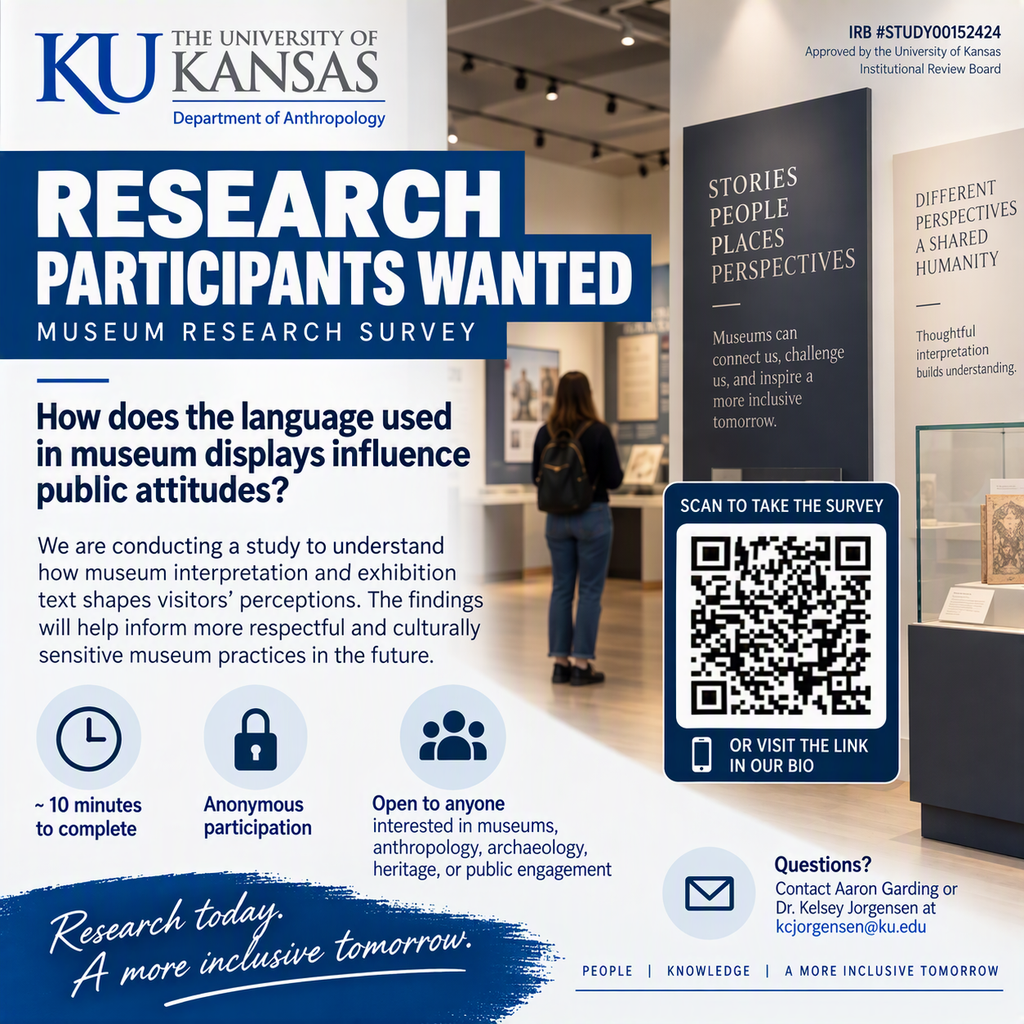
Aaron Garding, an Undergraduate Research Assistant in the Department of Anthropology at the University of Kansas, is currently undertaking research exploring how the language used in museum displays of human remains influences public attitudes and perceptions.
The study aims to better understand how different forms of interpretation affect visitor responses and how museums can communicate about sensitive collections in ways that promote understanding, respect, and inclusivity. Findings from the research may help inform future exhibition practices and contribute to wider discussions surrounding the display and interpretation of human remains in museum settings.
Take Part in the Survey
The survey:
- Takes approximately 10 minutes to complete
- Is completely anonymous
- Has been approved by the University of Kansas Institutional Review Board (IRB #STUDY00152424)
Participation is welcomed from anyone with an interest in museums, archaeology, anthropology, heritage, osteology, or public engagement. BABAO members and the wider community are encouraged to contribute their perspectives.
Access the Survey
🔗 Survey link:
Alternatively, participants can access the survey using the QR code shared through BABAO’s social media channels.
Further Information
If you have any questions regarding the study, please contact:
Aaron Garding
Department of Anthropology
University of Kansas
or
Dr Kelsey Jorgensen
Email: kcjorgensen@ku.edu
BABAO is pleased to support the dissemination of research that explores public engagement with human remains, museum ethics, and the communication of archaeological knowledge. We encourage members to consider participating in this study and helping to contribute to evidence-based discussions on museum interpretation.
This research opportunity is shared on behalf of Aaron Garding, University of Kansas Department of Anthropology.